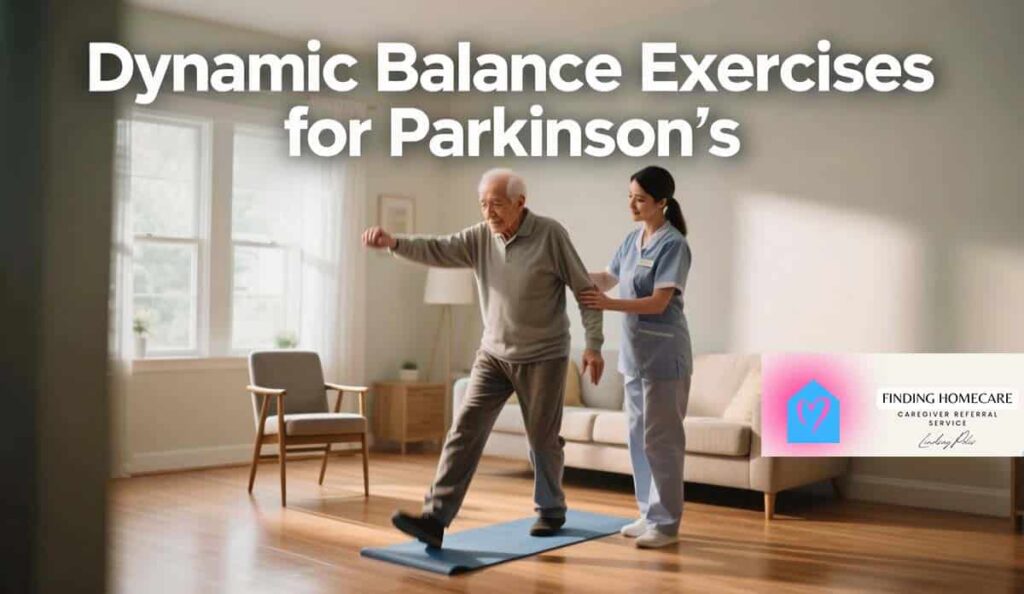
Having Parkinson’s disease can negatively affect the body’s balance and movement, which increases the risk of falling. However, by doing some simple and effective dynamic balance exercises regularly, this problem can be greatly reduced. These exercises can be performed in a safe environment at home, improving the patient’s mobility and increasing self-reliance. Below is a list of 6 dynamic balance exercises for Parkinsons patients and how to do them.
What is Dynamic Balance and Why It Matters for Parkinson’s?
Dynamic balance refers to the ability to maintain stability while in motion walking, stepping, or shifting weight. For people with Parkinson’s, dynamic balance is particularly crucial because impaired balance reflexes make movement challenging and increase fall risk.
Parkinson’s often causes postural instability, meaning patients struggle to maintain an upright position during movement. This leads to unsteady gait and difficulty with transitions such as standing up from a chair or changing directions while walking.
Incorporating dynamic balance exercises into daily routines helps retrain the body’s natural balance systems. Exercises like side-stepping, backwards walking, and figure-8 patterns improve the coordination between the brain and muscles, reducing episodes of imbalance.
Regular dynamic balance training not only enhances safety but also promotes greater independence. It assists in maintaining an active lifestyle and slows down progression of mobility decline. Combining these exercises with static balance training and cognitive challenges has shown even better results in reducing falls and improving gait.
If you or a loved one is dealing with Parkinson’s, beginning balance training at home is a safe step toward maintaining mobility. For professional home assistance, Finding Homecare’s Parkinson’s Home Care in San Diego provides skilled caregivers specialized in supporting these needs.
Top Effective Dynamic Balance Exercises for Parkinsons Patients at Home
Balance exercises are essential for Parkinson’s patients to improve their daily quality of life. These exercises not only strengthen muscles but also increase control over body movements. Below are some simple and effective home balance exercises for Parkinsons which will give great results with regular practice. It is best to do a light warm-up and stretching before and after each exercise.
Side Stepping Exercises
This is a simple but highly effective exercise, which helps maintain balance while walking sideways. This gives patients confidence when switching sides and moving through crowds.
How to:
- Stand next to a wall or a sturdy chair. This will help you maintain your balance.
- Stand straight with your feet together.
- Now move the right foot one step to the right.
- Bring the left foot to the right foot and place the feet side by side again.
- Similarly repeat this process on the left side as well.
- Take small steps at first, gradually try to take bigger steps.
- Repeat 10 to 15 times on each side.
Backwards Walking
Walking backwards is a challenging dynamic balance exercise that helps improve coordination between the brain and muscles. This can reduce the tendency to lean forward.
How to:
- Stand in an open space with no obstruction behind. Stand with your back against a wall if possible.
- Slowly move one leg back and place it on the ground.
- Now move the other leg back and bring it next to the first leg.
- Do this exercise slowly with full concentration, so that you do not lose balance.
- Walk 5 to 10 steps backward and then walk forward normally.
- Get help from a caregiver if needed.
Weight Shifting
This exercise helps to improve balance while standing. It activates the leg muscles and increases the ability to transfer body weight from one leg to the other.
How to:
- Stand straight with both feet shoulder-width apart.
- Slowly shift your body weight to the right leg and lift the left leg lightly off the ground.
- Stay in this position for 2-3 seconds.
- Now shift the weight on the left leg and lift the right leg lightly.
- Repeat this process 10 to 15 times.
Figure-8 Walking
This Figure 8 walking exercise is crucial for maintaining dynamic balance. It enhances body control while changing direction and improves brain neuroplasticity.
How to:
- Place two small objects (eg shoes or small pillows) on the floor 8-10 feet apart.
- Now start walking around these two objects like an English ‘8’.
- Start slowly and take each turn as carefully as possible.
- Have an assistant stand by at first.
- Do this exercise 3-5 times.
Single-Leg Stands with Arm Movements
While this exercise improves static balance, it also improves overall body coordination through hand movements.
How to:
- Stand behind a sturdy chair or against a wall.
- Lift one leg lightly off the ground.
- Hold this position for 20-30 seconds.
- When you feel comfortable with this exercise, lift one leg and raise your arms in front, to the side, or overhead.
- Repeat 10 times, then switch legs.
Marching in Place with Coordination
This exercise is essentially a simplified version of walking, which helps improve height and stability. It increases the ability to lift the leg while walking.
How to:
- Stand up straight and balance on the back of a chair.
- Now lift one leg higher than the knee, so that the knee reaches the height of your waist.
- At the same time, lift the opposite arm forward, as we do while walking.
- Do this exercise slowly and in a controlled manner.
- Repeat this process 15-20 times.
You should consult your doctor before starting these exercises. A coordinated care plan, with professional caregiver help, can make your loved one’s life easier. Our Parkinson’s Care Services, Care Management and Advocacy.
Safety Tips and When to Consult a Professional
Balance exercises are very beneficial for Parkinson’s patients, but it is very important to do them safely. Some general precautions should be followed while exercising. To ensure Parkinson’s exercise safety, always hold onto something sturdy, such as a wall or chair. Stop exercising immediately if you experience any signs of lightheadedness or loss of balance. Remember, balance exercise precautions include wearing loose clothing and shoes that are non-slip. If there are carpets or loose mats on the floor, remove them to avoid tripping hazards.
Talk to your doctor before starting these exercises. If you or a loved one has any health complications, it is wise to seek the help of a physical therapist for Parkinson’s. A professional therapist can create a personalised exercise plan based on your physical abilities and needs.
It will help you teach you proper form and technique, which are essential for exercising safely with Parkinson’s. Exercising under the supervision of a therapist can help you reduce the risk of falls and see faster progress.
Incorporating Dual-Tasking and Cognitive Challenges in Balance Exercises
For people with Parkinson’s disease, physical exercise alone is not enough; it’s also important to challenge the brain and body to work together. Dual-tasking exercises are techniques where you do two things at the same time, such as talking while walking or doing simple math. This activates the parts of the brain that coordinate movement and thought.
This type of cognitive balance training can improve brain function. For example:
- Ball walking: Walk with a soft ball and pass it from one hand to the other at the same time.
- Math walking: Do simple addition and subtraction while walking, such as subtracting 7s from 100.
- Question and answer exercises: Play a question and answer game with a caregiver or family member while walking.
- Singing and singing: Walk while reciting a favorite song or poem.
These multi-task balance training exercises strengthen neural connections, which increases control over your body’s movements and reduces the risk of falls. This improves the ability to multitask in daily life, such as: talking while shopping or walking while talking on the telephone. Our expert caregivers are specially trained to incorporate such dual-tasking techniques into patients’ routines.
Benefits of Regular Dynamic Balance Training for Parkinson’s
Regular dynamic balance training can make a huge difference in the lives of Parkinson’s patients. Studies have shown that this type of exercise is a powerful tool for fall prevention in Parkinson’s. It increases the body’s ability to maintain balance and improves reaction time, which helps to avoid sudden dangers.
With this exercise, you can improve your gait (walking style). It increases the length of your stride while walking, reduces the tendency to rub your ankles, and keeps your body posture correct. improve gait These exercises are very effective for Parkinson’s. In addition, regular exercise strengthens the muscles of the body, especially the muscles of the waist and legs, which increases the stability of the body.
Most importantly, these exercises help enhance quality of life. When a patient can walk safely, their confidence increases and they can participate more in society. This not only has physical benefits but also improves mental health. Our Parkinson’s disease home care services can help get these benefits
Conclusion
Parkinson’s disease is a challenging journey, but with the right care and exercise, life can be made easier and more meaningful. Regularly doing dynamic balance exercises and keeping safety in mind is crucial. These exercises not only increase your physical fitness, but also increase your confidence and independence.
We know that this journey is difficult to walk alone. The help of a professional caregiver can be life-changing for you or your loved one. Our Parkinson’s home care services in San Diego are committed to providing you with the right support and expert supervision. Our trusted Parkinson’s home care services include personalized exercise plans, medication reminders, and assistance with daily tasks.
Don’t wait any longer! Contact us today for expert care to ensure a better life for you or your loved one. Our professional referral caregivers are always ready to help you.