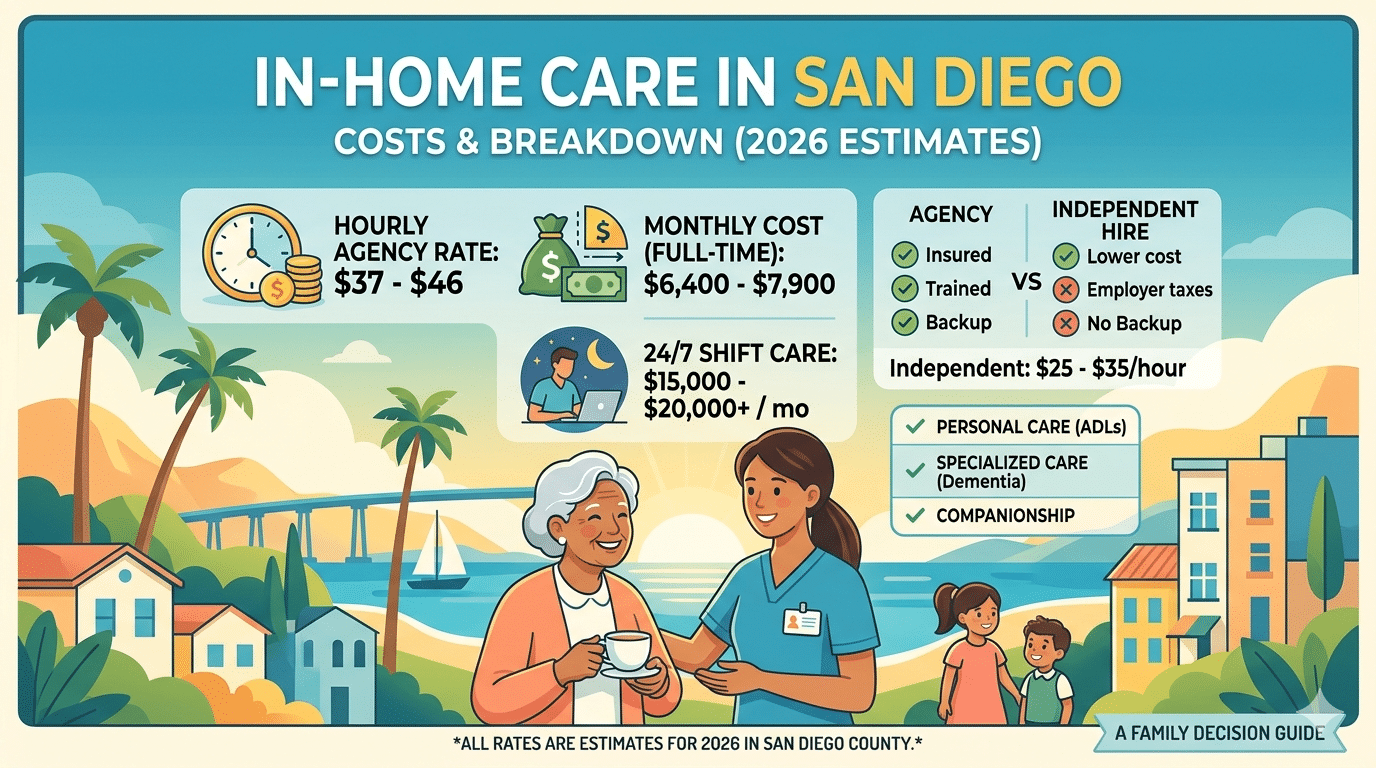

Choosing the right care option for your elderly loved one is a huge dilemma for many families. It’s a decision that not only affects their lifestyle but also your family’s peace of mind and finances. You may be wondering whether it’s better to leave them in a familiar environment with in-home or 24-hour home care, or move them to an assisted living community where a full range of elderly care options are available.
In this blog, we’ll explore 24-Hour Home Care vs Assisted Living in detail to help you make the most informed decision. As an experienced USA Caregiver expert, our goal is to explain how factors like cost, lifestyle, health, and family support play a major role in choosing the right care. Let’s find the solution that’s best for your loved one.
What is 24-Hour Home Care?
24-hour home care is a service where a trained live-in caregiver or a team of shifting caregivers provides round-the-clock support from your loved one’s home 24 hours a day. This means that a professional is always ready to meet their needs at any time of the day.
Advantages and Functionality:
- Personalized Elder Care: In this care, all services are tailored to the loved one’s specific needs, routines and preferences. For example, attention to diet, medication timing, or favorite hobbies.
- Known environment: Emotional well-being is maintained due to staying at home. Loved ones can stay close to familiar furniture, neighbors and pets.
- Family Benefits: Family members can easily visit and participate in the care process. Learn how this balance helps reduce burnout in our post on stress relief tips for family caregivers
Who is suitable for:
- Dementia patients who need a familiar environment.
- Those who have limited mobility or who want to stay healthy and comfortable at home.
- Families who want to maintain home comfort.
Important: 24-hour home care usually refers to “live-in” or full 24-hour coverage with two shifting caregivers. If your loved one is recovering from surgery, check our Post-Surgery Care in San Diego services for structured in-home recovery.
What is Assisted Living?
Assisted Living is a residential care facility or senior living community, which is designed for seniors who need some assistance with personal care and activities of daily living (ADLs – Activities of Daily Living) such as bathing, dressing, eating, etc., but do not require intensive medical care such as in a nursing home.
You can also compare this option with Memory Care vs Nursing Home to better understand how facility-based support differs from in-home care.
Structure and Facilities:
- 24/7 Staffing: Trained staff are always present, who can respond to emergencies and provide routine assistance.
- Social Life: These communities usually have common dining areas, libraries, gyms and organized elder social activities.
- Safety & Supervision: Facilities are designed for the safety and supervision of the elderly, which provides great relief to those with limited family support.
Who benefits the most:
- Those who feel lonely and want regular social engagement.
- Those who need a structured routine and consistent professional care.
Important information: Research shows that finding assisted living home care services near me is a relief for many families. However, one of the biggest disadvantages of assisted living is the somewhat reduced autonomy and the need to adhere to the routine of the institution rather than personal preferences. Some studies have shown that many people live longer in assisted living because of adequate social connections.
24-Hour Home Care vs Assisted Living: A Comparative Discussion
To facilitate families’ decision-making, below is a side-by-side comparison of these two care options:
| Characteristics | 24-Hour Home Care | Assisted Living |
| cost | Usually charged on an hourly basis, which can be quite high for 24 hours. ($18 – $35/hour in the USA) | Usually on a monthly fee basis, which includes rent, food, and some care services. |
| Medical supervision | Basically, non-medical support by a personal caregiver. Nursing care requires separate costs and arrangements. | 24/7 supervision and primary health care by trained facility staff. |
| Freedom and autonomy | Maximum autonomy. Individuals can live in their own homes, according to their own routines. | limited freedom. Have to stay within the organization routine, dining time and rules. |
| social communication | Family-focused. Uninterrupted communication with friends and family. | Community-focused. Socialization through other residents and organized activities. |
| Family involvement | Even if there is a caregiver, the family has to supervise and coordinate. | The caregiving burden is mainly on the institution, the caregiving burden of the family is reduced. |
Comparing 24-hour home care vs assisted living costs shows that home care can be less expensive when less care is needed. However, when full 24-hour support and a higher level of assistance are needed, home care often becomes more expensive than the monthly fee for assisted living. Keep in mind that nursing homes (which provide higher levels of medical care) are generally more expensive than assisted living.
If you’re caring for a stroke patient, our Stroke Care in San Diego service provides specialized therapy and caregiver support tailored for recovery.
Key Factors to Consider in Choice
There are some important questions you should ask yourself to find the right elder care option:
- Health and Medical Needs: Does your loved one need very frequent medical supervision, such as injections or serious wound care? Need 24-hour care for any stage of dementia? When safety and ambulation risks are too great or frequent nighttime assistance is required, 24-hour care is required.
- Social Needs and Lifestyle: Does your loved one feel alone easily? Does he enjoy social events? If yes, then assisted living community living may be a good fit.
- Financial Situation: Are you prepared to pay around $120,000 per year (the average cost of assisted living in the USA) or higher rates for 24-hour in-home care? Review your financial plan before making long-term care decisions.
- Family Involvement and Peace of Mind: How actively is your family willing to participate in the care process? How do you know when it’s time to put your parent in assisted living? When family members are constantly concerned about the safety of their loved ones and do not have the ability or time to provide care.
Hidden costs and financial considerations
It is important to be transparent about the cost of care.
- Variable costs in home care: 24-hour nursing care or in-home assisted living costs may increase every year. In addition, caregivers may have separate costs for overtime, travel expenses, and equipment or medical supplies.
- Hidden Costs of Assisted Living: While the monthly fee in Assisted Living appears to be “all-inclusive,” additional charges are often added for additional services (such as medication administration or memory care). These “hidden costs of assisted living” must be known in advance.
Source of Funding: Remember, in most cases, Medicaid only covers nursing home care. Who pays for 24-hour nursing care? The answer to this question is usually private savings, long-term care insurance, or some program specific to veterans (such as VA Benefits).
Making the right decision for your loved one
These comparisons and key considerations will help guide you in a clear direction. 24-hour home care is best for independence, personal routines and familiar surroundings. And assisted living is best for socialization, structural security and relieving the family of the caregiving burden best care option for seniors।
It is important to consult with an experienced financial and care professional before making your decision.
Conclusion
Choosing care for your loved one is a deeply personal process. While 24-hour home care offers unmatched independence and comfort, assisted living ensures security and community life. The right choice depends on your loved one’s health, social preferences, and financial capabilities.
At developertestserver2.com/lindsay-polis/, we believe every family deserves compassionate, expert guidance. Whether you’re looking for post-surgery recovery support or Alzheimer’s care services, our experienced team is here to help.
Visit developertestserver2.com/lindsay-polis/ today to find the best path for your loved one.