
Caring for a loved one with dementia can feel overwhelmingly lonely, navigating both the emotional strain and the practical challenges of daily life. According to the Alzheimer’s Association, millions of American families are going through this difficult journey. As a professional USA caregiver, I know that with the right support and strategies, this task can be easier and more meaningful.
This guide was created for family caregivers like you. It is a proven Tips for Dementia Caregivers guide that will give you real-life insights and ensure a better life for your loved one and yourself. developertestserver2.com/lindsay-polis/ is your supportive partner, standing by your side with professional dementia care and compassionate support.
Establish a consistent daily routine
Daily routines can be life-saving for dementia patients. When memory and timing are lost, a structured dementia care plan makes life predictable and safe. This dementia care structure reduces stress on the brain and helps reduce the restlessness or confusion dementia causes.
Example from an experienced caregiver: I have seen how a set routine calms my clients’ anxiety. Waking up at the same time in the morning, having breakfast at the same time, and a set walk in the evening – these consistencies make their day calm and normal.
Keep mealtimes, walks, and rest times the same every day. Avoid unexpected changes.
Communicate clearly and kindly
The key to dementia communication tips is patience and simplicity. Your tone, body language, and calm speech are more important than the words you say. Your loved one may forget the words, but they can feel your emotions.
If you ask, What are 5 communication strategies for dementia? The answer is:
- Keep sentences short and ask only one question at a time.
- Speak slowly and make eye contact.
- Be patient when you don’t get a direct answer; don’t ask repeatedly.
- Avoid arguing. Focus on their emotions or feelings rather than correcting them.
- Call them by their name instead of pronouns. It’s easier to get their attention.
These communication tips for dementia caregivers can make a major difference in daily interactions.
Create a safe and supportive home environment
Making the home environment safe is very important for dementia home safety, as it reduces the risk of wandering and accidents. A safe environment helps them maintain their independence.
Dementia Home Safety Checklist:
- Remove tripping hazards (e.g. loose carpets, wires).
- Install grab bars in bathrooms and on stairs.
- Clearly label doors and drawers (e.g. Clothing, Bathroom).
- Keep dangerous items (e.g. cleaners, medications) locked away.
Encourage independence and confidence
Dementia independence tips focus on small wins. Involve your loved one in daily living tasks. This can help build their confidence and reduce frustration.
- Give them a choice: “Would you rather wear the blue shirt or the green one?” Allow them to make choices.
- Give them a helping hand: Let them help move food or set the table while you cook.
- Small tasks: If they can’t tie their shoes, just help them put on their socks.
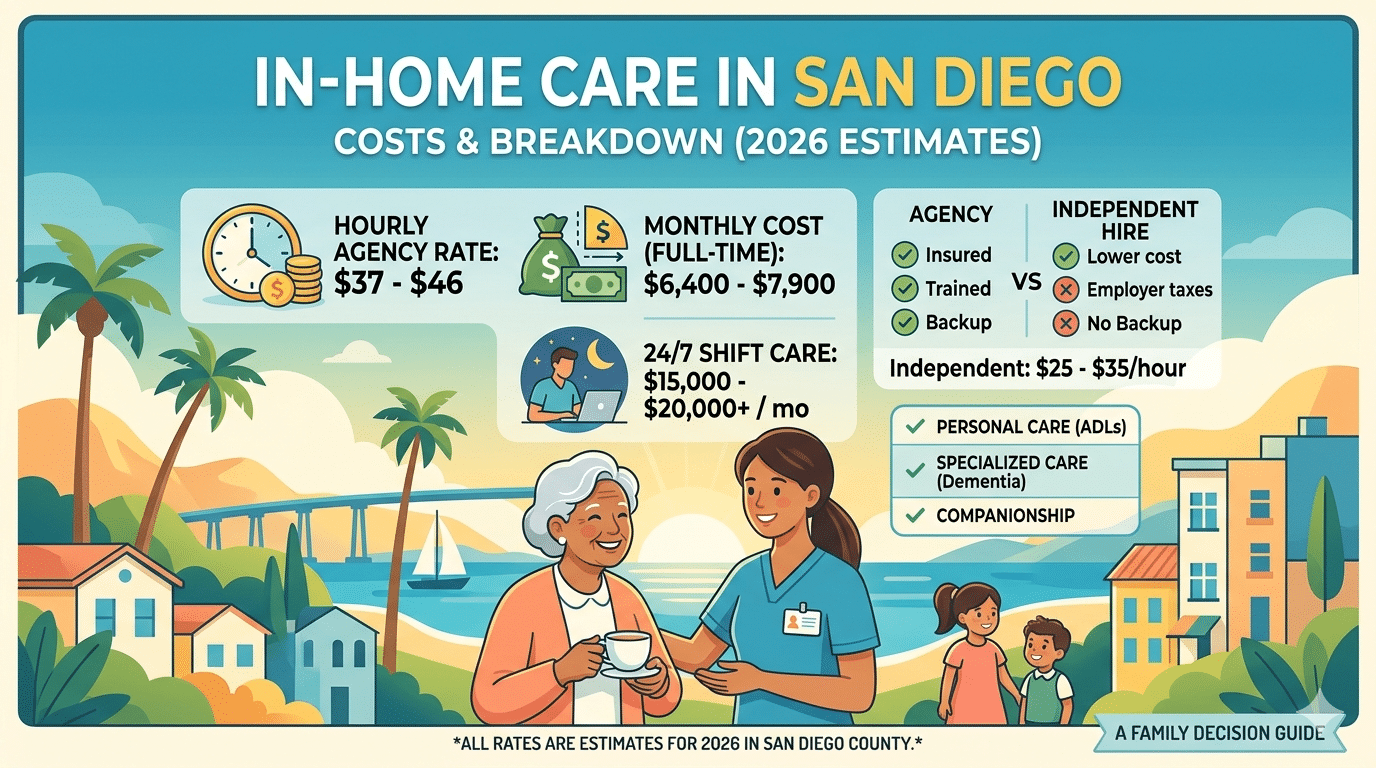
Remember, when you encourage them to participate in daily living dementia tasks, you help them maintain their individuality and self-esteem. If you need help, our in-home dementia caregivers in San Diego can assist in setting up a safe space.
Use memory aids and visual aids
We can fill in the gaps in their memory by using dementia memory aids and cognitive support tools. Visual clues help them connect with their environment.
- Calendar and clock: Use a calendar with large, clear letters or numbers, showing today’s date, day, and month.
- Labeled drawers: Label closet drawers with pictures or names of items.
- Photo albums: Use pictures of loved ones, especially people from the past, when talking to them.
As a caregiver, these small reminders can reconnect them with familiar things, which can bring them a sense of comfort.
Be patient with behavior changes.
Dementia often leads to behavioral changes, such as restlessness, aggression dementia care, or sleeping during the day and waking up at night. Understanding the cause is essential for dementia behavior management.
What can make dementia worse quickly? Illness, pain, dehydration, changes in medication, or sudden changes in environment can make dementia symptoms worse quickly.
How to deal with aggressive dementia patients?
- Stay calm: Avoid loud voices or quick movements.
- Find the cause: Is he in pain? Is he hungry? Is he confused?
- Redirect: Take your attention away from the situation by engaging in a relaxing activity, a favorite song, or taking him to another room.
- Reassure: Use simple, friendly words to tell him that you are with him and that he is safe.
Warning for caregivers: In this situation, it is very important to watch for signs of caregiver burnout (fatigue, frustration).
Make mealtimes comfortable and stress-free
Mealtime dementia care should be facilitated by creating a calm, comfortable environment. Dementia eating tips help ensure nutrition.
How to deal with eating difficulties in dementia?
- Maintain the same schedule: Serve meals at the same time every day.
- Give small portions: Small, easy-to-eat meals rather than large meals soft foods.
- Less distraction: Keep the television off during meals.
- Use simple utensils: Use a bowl or spoon that is easy to hold.
It is important to ensure that your loved one’s nutrition for dementia patients is up to par.
Use songs and memories to increase connection
Music therapy is a powerful way to create an emotional connection with dementia patients. Memory-based stimulation can activate parts of the brain that often don’t respond to conversation.
An example: One of my clients, who had almost given up talking, started humming along and her eyes lit up as soon as a favorite song from her teens was played.
- Favorite song playlist: Make a list of their favorite old songs, or songs from important times in their lives.
- Sing together: Simple activities like listening to music or singing together can reduce restlessness.
Take care of your own health and well-being
Dementia caregiving is not only physical work, it also creates deep emotional stress. According to the CDC, dementia caregivers are at increased risk for physical and mental health problems.
- Self-care for dementia caregivers: Exercise regularly and get enough rest.
- Get help: Caregiver stress relief. Join a support group for -. Sharing experiences can reduce stress.
For your rest: You are not doing this alone. Our professional in-home caregiver services provide respite care so you can take time for yourself and avoid burnout.
Build a reliable support network
Working together makes even the hardest tasks easier. Asking for help from friends, family members, or professionals for dementia caregiver support and family caregiver help is not a sign of weakness, but a smart decision.
- Learn to ask for help: Divide up small tasks among family members.
- Rely on professionals: Trained home care service USA professionals can help you overcome everyday challenges.
At developertestserver2.com/lindsay-polis/, we match families with compassionate caregivers who are experienced in dementia support.
When to Consider Professional Dementia Home Care?
This decision is difficult, and it is not always necessary. As long as your loved one is comfortable at home, it is possible to receive quality care at home through professional dementia care USA.
When professional help is needed:
- Security concerns: When wandering increases or you are concerned about serious accidents at home.
- Severe stress: If you stress and physical illness continues to increase.
- Difficult task: When tasks like dressing, bathing, or taking medication become beyond your control.
You don’t have to do this alone. Professional home caregivers can help maintain comfort and dignity in your loved one’s own home.
Conclusion
Dementia caregiving is a journey of love, patience, and resilience. Your compassion makes a lasting difference in your loved one’s life. These dementia caregiver tips will help you care with confidence — and remember, by taking care of yourself, you can care for them better. developertestserver2.com/lindsay-polis/ is a trusted name in dementia care in San Diego, offering the right help and compassionate support. You are not alone.