A common question in the world of caregiving is: Are “Memory Care” and “Dementia Care” the same? If you are looking for the right senior care services in the USA for your loved one, it is essential to understand the difference between memory care and dementia care. Many providers often use these two terms interchangeably, which can cause confusion among families.
But as an experienced USA Caregiver expert, I can assure you that these two terms are not exactly the same. Dementia Care is an umbrella term that encompasses all conditions associated with memory loss, such as Alzheimer’s support or other cognitive care options. In contrast, memory care is a specifically designed residential service. In this post, we will briefly analyze the key differences between memory care vs dementia care, so that you can choose the right senior living care levels for your loved one.
What Exactly is Memory Care?
Simply put, memory care is a type of specialized facility designed primarily for seniors with early to mid-stage dementia or Alzheimer’s. A memory care facility or unit often functions as a part of general assisted living alternatives like companion care.
Key features of Memory Care and memory care services:
- Secure Environment: This is the most important aspect of memory care. Entrances and exits to these facilities are fully secured or locked, preventing dementia patients from wandering or going into unsafe places.
- ADL Support: Here, the staff provides daily living support, including bathing, dressing, grooming and meals.
- Cognitive Stimulation Programs: Staff are specially trained in memory-focused activities. These include therapeutic recreation, music therapy, art therapy, and retrospective sessions (memory-focused activities).
The goal of memory care is to keep residents in a safe and familiar routine, which reduces anxiety and improves quality of life.
For example, memory care facilities in California typically provide a balance of security and social engagement for early to mid-stage Alzheimer’s patients. It ensures a safe living environment where cognitive stimulation programs are part of the daily routine.
What exactly is dementia care?
Dementia care is a broad term that refers to all the help, support, and medical interventions needed to treat cognitive decline. It is not limited to a single facility, but can be divided into different levels according to need.
Dementia care is required when a patient begins to have advanced cognitive decline and cognitive and behavioral symptoms become severe.
Comprehensiveness of Dementia Care:
- 24/7 Supervision: 24/7 supervision is essential for the patient’s safety. As dementia progresses, it becomes more dangerous for the patient to be alone.
- Behavioral Management: As the disease reaches the final stages, the patient may experience serious behavioral problems such as mood swings, aggression, or hallucinations. Dementia support includes behavioral interventions and therapy.
- Medical and Nursing Care: Skilled nursing dementia care is often required at this level. Dementia care facilities or nursing homes are prepared to handle complex medical situations such as serious health problems, gastrostomy tube (G-tube) feedings, injections, or breathing problems.
In summary, dementia is a combination of all necessary services and support systems — from in-home dementia care in San Diego to higher-level nursing home care — depending on the stage of illness.
Key Differences Between Memory Care VS Dementia Care
Although Memory Care is a type of Dementia Care, there are important differences in their services, environment and cost. Understanding these differences will help families make the right decisions.
| Feature | Memory Care | Dementia Care |
| Type of Care | Facility-based specialization. An extension of assisted living services. | Umbrella term/broad service. Can include in-home care, day care, assisted living, or nursing home at any level. |
| Level of Impairment | Early to mid-stage. Patients need assistance with ADLs but still maintain some independence. | Mid to advanced stages. Complete dependence with severe behavioral changes. |
| Environment | Secure facilities designed to prevent wandering. | Variable settings – at home, in day care, or in higher-level nursing homes. |
| Staff Training | Trained in cognitive decline stages and engagement therapies. | Trained in skilled nursing and complex behavioral interventions. |
| Cost Factors | About 20%–30% higher than standard assisted living. | Highly variable depending on patient needs. Most expensive in 24/7 in-home care or nursing home settings. |
Which facility is best for dementia patients?
It depends on the patient’s level of cognitive decline.
- Early stage: In-home care or Assisted Living with mild Alzheimer’s support is sufficient.
- Mid-stage: Memory Care is best if you are at risk of getting lost or need extra support.
- Advanced or late stage: If complex treatment or around-the-clock (24/7) medical supervision is required, then a Skilled Nursing Facility or high-level dementia care unit is best between dementia care vs nursing home.
Families may also consider hospice care in San Diego if the patient is in the late stages with declining health.
When Is Memory Care Needed vs Dementia Care?
One of the most difficult decisions for families is: when to move from assisted living to memory care. Accurate timing depends on patient efficacy and safety.
When Memory Care is Needed:
- Senior Safety Concerns: If the patient repeatedly wanders alone, is careless with fire or hot objects, or begins to have trouble sleeping at night (sundowning), a transfer to a secure Memory Care facility is necessary.
- Increasing Problems with ADL: Memory care is needed when the staff in assisted living cannot meet the patient’s ADL (Activities of Daily Living) needs, as there is a higher staff-to-resident ratio.
When Advanced Dementia Care (Skilled Nursing) is needed
- Extreme behavioral problems: If the patient is experiencing aggression, physical attacks, or severe hallucinations that are beyond the reach of normal memory care staff, then the question of what stage of dementia needs 24-hour care arises. Skilled nursing or 24/7 nursing care is essential at this stage.
- Physical health decline: In the late stage of dementia, when the patient is unable to swallow or breathe, or requires medical services such as complex wound care or injections, it is time for an assisted living transition.
The exact timing of care is different for each family. Early signs of dementia needing care such as forgetfulness, mood swings, or neglect of personal hygiene, should be sought immediately by a specialist.
Memory Care vs Dementia Care (Cost Comparison)
Dementia care is an expensive process. Financial planning for senior care is essential to have a clear understanding of costs. Costs depend on location, type of service and intensity of care.
| level of care | National Average Monthly Expenditure (USA 2024/2025) | National Average Annual Expenditure |
| In-Home Dementia Care (Home Health Aide, 44 hours/week) | $6,000−$6,300 | ≈$75,000 |
| Memory Care Cost (Residential) | $6,450 (25% more than other Assisted Living) | ≈$77,400 |
| Nursing Home Private Room | $10,646 | ≈$127,750 |
| In-Home Dementia Care Costs (24/7) | $24,000+ | ≈$288,000+ |
(Source: Genworth, A Place for Mom, 2024/2025 Long-Term Care Cost Reports)
- Memory Care Facility Cost: National median consumption $6,450 per month. These costs typically include room rent, food, ADL assistance, programming, and 24/7 supervision.
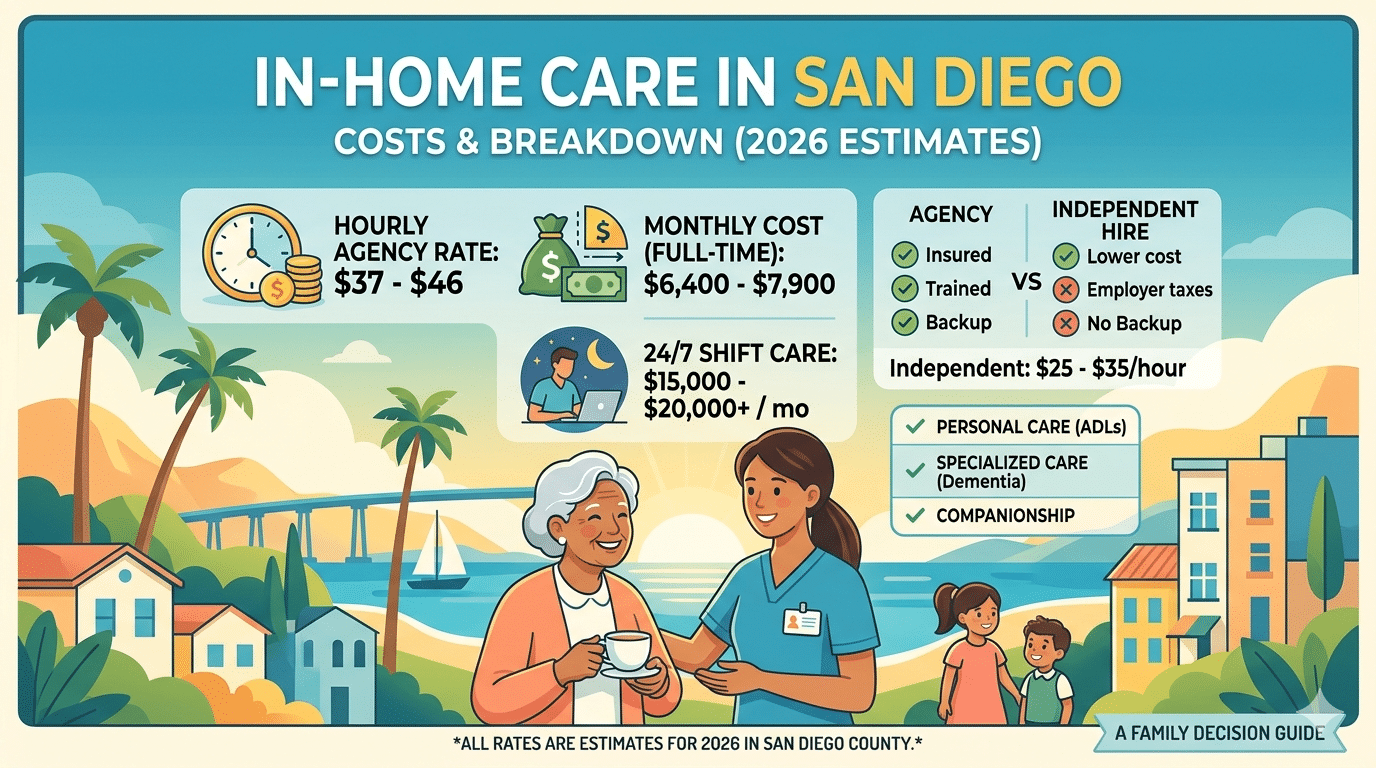
- In-Home Dementia Care Cost USA: Home care generally $33 per hour (national median) costs. If the patient needs 24/7 supervision, it can be much more expensive than any residential care.
- Role of Medicare: This is the most important information for long-term dementia expenses. Medicare does not pay for memory care or any long-term custodial care (room and board). However, it may cover the cost of dementia diagnoses (cognitive assessments), doctor visits, and FDA-approved prescription drugs (Medicare Part D).
How Finding Home Care can help California families
At Finding Home Care, we understand how difficult it can be to care for a loved one with dementia or Alzheimer’s. We specialize in providing families with trusted and personalized in-home care services in California. Our goal is to ensure your loved one can live in a familiar environment with the utmost dignity and comfort.
We offer the following services:
- In-Home Dementia Support: Through our trusted senior care California services, we provide in-home dementia care in the patient’s home. This includes assistance with ADLs, light medical supervision, and 24/7 companionship.
- Personalized Care Plan: We create a personalized care plan based on each patient’s cognitive decline stages and needs, which adapts to the patient’s changing condition over time.
- Expert Caregiver Training: Our dementia caregiver support staff at all of our California locations, including San Diego, are highly trained in behavioral management, communication techniques, and cognitive stimulation programs.
We believe that providing care in the home significantly improves a patient’s quality of life.
Conclusion
Choosing between memory care vs dementia care is an important decision that requires consideration of safety, level of care, and affordability. Remember, memory care is a type of specialized facility that provides a safe environment for dementia patients, while dementia care is a broad umbrella term that encompasses all care options for your loved one based on their stage of the disease.
When considering transitions, evaluate safety risks, ADL needs, and medical complexity. Seeking guidance from an expert caregiving team will help reduce stress and ensure the right decision.
If you need help choosing between memory care and dementia care, contact Finding Home Care today for a free consultation.