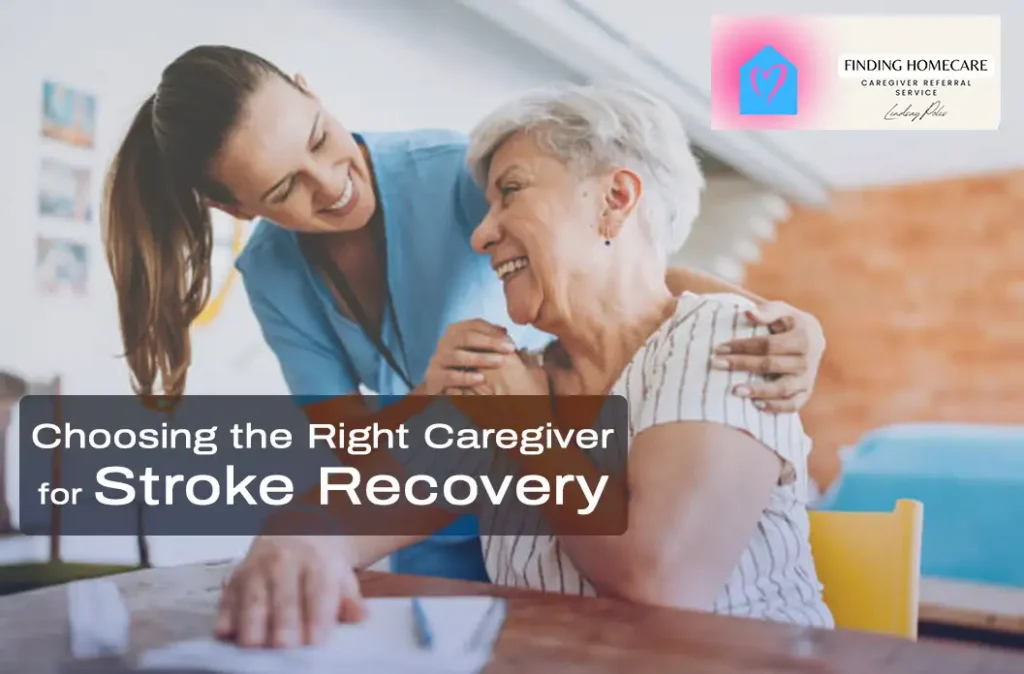
Recovering from a stroke can be one of life’s biggest challenges. The road back to independence is often slow and requires consistent medical attention, emotional support, and day-to-day care. Choosing the right stroke recovery caregiver is not just important, it can directly impact the speed and quality of recovery.
This guide will help you understand why the right caregiver matters, the qualities to look for, and the steps you can take to make the best choice for your loved one.
Why Choosing the Right Caregiver Matters in Stroke Recovery
Stroke recovery is a journey that affects both the mind and the body. At this point, the caregiver is much more than a helper—they become a true partner on the road to recovery.
A skilled caregiver can:
- Monitor health: Check vital signs, manage medications, and spot complications early
- Assist with daily living: Help with meals, hygiene, and mobility
- Encourage rehabilitation: Support prescribed therapy exercises and routines
- Provide emotional stability: Offer reassurance and motivation through setbacks
Did you know? Families who work with qualified caregivers experience fewer hospital readmissions and better long-term outcomes. Learn more about our Care Management and Advocacy Services for post-stroke recovery.
Qualities Every Stroke Recovery Caregiver Should Have
Stroke recovery is a complex and long-term process. So choosing the right caregiver at this time is very important. An ideal caregiver must possess the following characteristics:
1. Medical knowledge and skills
Basic medical knowledge is essential for a stroke recovery caregiver. He should be able to:
- Medicine Management: Being able to administer medication at the right time and dose, observing side effects of medication.
- Vital sign checking: Accurate monitoring of blood pressure, pulse, and respiration rate.
- First aid in emergencies: Contact a doctor if you notice symptoms such as sudden fainting, shortness of breath, or re-stroke.
2. Patience and compassion
Stroke recovery is often slow and repetitive. It can also be emotionally draining. That’s why a caregiver’s patience is crucial.
- Infinite patience: Not getting bored while doing the same thing over and over again.
- Sympathy: Understanding and empathising with the stroke survivor’s frustration, anger or confusion.
3. Communication skills
Many people have problems using language (aphasia) after a stroke. Caregiver communication skills are very important when:
- Non-verbal communication: Communicating using hand gestures, picture cards, writing or mental signals.
- Active listening: Understanding and listening patiently to stroke survivors.
4. Emotional support
Psychological problems are very common after a stroke. The role of the caregiver is not only physical support but also emotional support:
- emotional support: Encouraging stroke survivors, regaining confidence.
- Identifying depression: Look for signs of mental deterioration (eg apathy, tearfulness, trouble sleeping) and seek medical advice.
5. Mobility support
Many people lose their ability to walk or move after a stroke. Caregivers need to know:
- Safe transfer technique: Safe transfer from bed to chair, chair to toilet.
- Use of mobility aids: Ability to use a walker, wheelchair, sleep board etc.
- Assistance with rehabilitation exercises: Cooperating with exercises directed by a therapist.
6. Organisational skills
Stroke recovery requires regular treatment and therapy. Caregiver should be able to:
- Adherence to medication schedule: Maintaining and providing daily medication list.
- Appointment Management: Coordination with doctors, therapists, primary care doctors.
- Follow the therapy routine: Adherence to physio, occupational and speech therapy schedule.
If your caregiver has these qualities, you can confidently move forward on the path to stroke recovery. developertestserver2.com/lindsay-polis/ is committed to finding you competent, reliable and trained caregivers.
Step-by-Step Guide to Choosing the Right Caregiver
The process of finding a caregiver is easier when you follow a clear plan.
Step 1: Assess the Survivor’s Needs
Create a list that covers:
-
Physical needs: mobility support, therapy exercises, medication management
-
Emotional needs: depression, fear, or anxiety
-
Communication barriers: trouble speaking or understanding
Step 2: Make a List of Potential Caregivers
You can choose from:
-
Family members or friends who can dedicate time consistently
-
Professional caregiving agencies like developertestserver2.com/lindsay-polis/ that provide trained and supervised caregivers
Step 3: Conduct Interviews and Assess Skills
-
Ask about their experience with stroke survivors
-
Observe their behavior, compassion, and patience
-
Test their knowledge with small tasks (e.g., demonstrating medication organisation)
Need help screening candidates? We can help. Schedule a free consultation on our Home Care Services page.
Common Mistakes to Avoid When Choosing a Caregiver
Even with the best intentions, many families make mistakes that can slow recovery:
-
Hiring solely based on price: Untrained, low-cost caregivers can miss critical health issues
-
Skipping background checks: Safety and trust must come first
-
Overlooking soft skills: Medical knowledge is important, but empathy and communication matter just as much
Learn more about Home Care vs. Independent Caregivers before you decide.
Home Care or Nursing Home: Which Is Best for Stroke Survivors?
Home Care offers the comfort of familiar surroundings and personalised support, while nursing homes provide 24/7 medical facilities.
| Subject | Home Care | Nursing Home/Assisted Living |
|---|---|---|
| Comfort | Familiar home environment | New environment, often harder to adjust |
| Care style | Fully personalized | Group-based |
| Cost | Usually lower | Higher |
| Social interaction | Limited (unless family visits often) | More opportunities |
| Medical facilities | Limited | On-site full medical staff |
Our recommendation: Most stroke survivors recover best at home, surrounded by their family and familiar routines. Explore our Home Care Services to see how we can support you.
Why Choose developertestserver2.com/lindsay-polis/ for Stroke Recovery Support?
We’ve been helping families find qualified caregivers for years. Here’s how we ensure the best match:
Caregiver Verification
- Complete background checks
- Verification of medical training certificates
- Reference checks
Training & Support
- Stroke-specific training for caregivers
- Monthly performance reviews and feedback
Flexible Scheduling and Pricing
- 24/7 care available
- Hourly, daily, and monthly plans
- Affordable rates without compromising quality
Free Consultation & Care Resources
- Schedule a call at no cost
- Download our stroke caregiver checklist from our Resource Center
FAQs About Choosing a Stroke Recovery Caregiver
How long does it take to recover from a stroke?
Most recovery occurs within 3–6 months, but progress can continue for up to 2 years with consistent care.
What are the signs of caregiver burnout?
Fatigue, irritability, confusion, and sleep issues are common. If you suspect burnout, consider respite care through our Companion Care Services.
Is home care always the best option?
Not always. Families should weigh costs, medical needs, and the survivor’s comfort level. Read our guide on Assisted Living vs. Home Care for a deeper comparison.
Conclusion
Choosing the right caregiver can make all the difference in stroke recovery. The wrong fit can lead to unnecessary setbacks, while the right caregiver can restore independence, confidence, and hope.
At developertestserver2.com/lindsay-polis/, we are here to guide you through every step of the process. Whether you need full-time assistance or just occasional support, our team can help you find the caregiver that meets your loved one’s needs.
Start your journey today. Contact us through our Stroke Care San Diego page or call for a free consultation.