
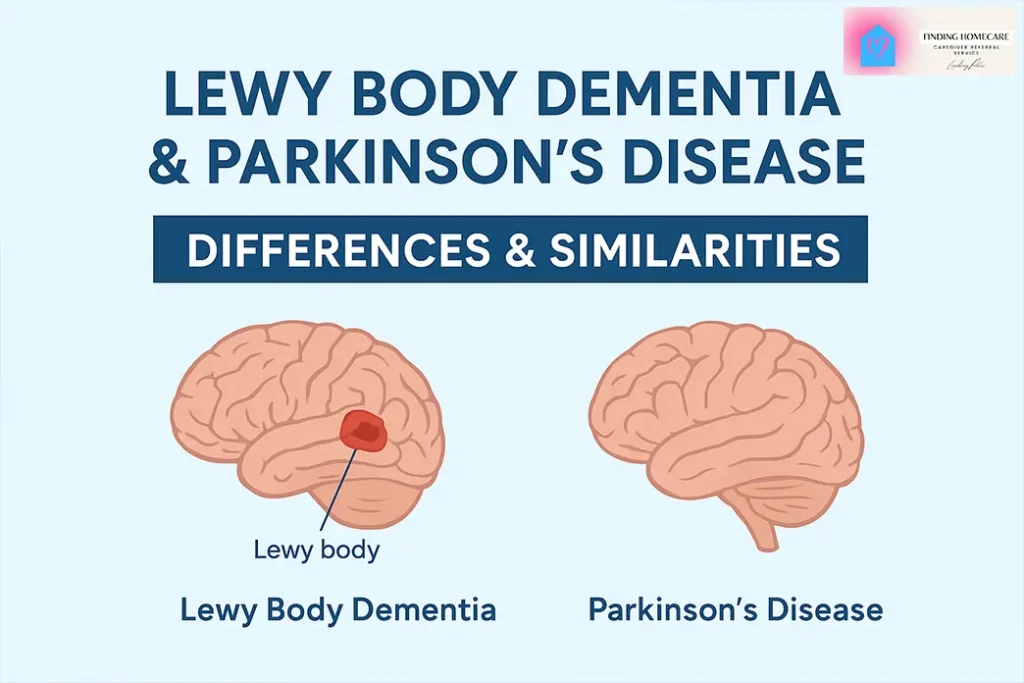
Lewy Body Dementia and Parkinson’s Disease are two neurodegenerative diseases, which cause various problems in the brain due to the accumulation of Lewy body proteins. However, the symptoms and progression of the disease differ between them. Attention, memory and vision are usually rapidly affected in LBD, whereas Parkinson’s disease primarily causes movement and gait problems.
Understanding this difference is important because accurate diagnosis and treatment help improve the patient’s quality of life.
Lewy Body Dementia and Parkinson’s Disease: Differences Analysis
Lewy Body Dementia (LBD) is an umbrella term that includes two diseases — Dementia with Lewy Bodies (DLB) and Parkinson’s Disease Dementia (PDD). Both diseases involve the accumulation of abnormal proteins called Lewy bodies in the brain, but they differ in the timing and sequence of symptoms.
- Dementia with Lewy Bodies (DLB): Here, cognitive symptoms such as memory impairment, confusion and visual hallucinations usually precede or accompany motor symptoms. Attention, executive function, and visual processing are rapidly affected in this disease. Motor symptoms such as tremor, stiffness and slow movement appear later.
- Parkinson’s Disease Dementia (PDD): Motor symptoms of Parkinson’s disease (eg: tremor, rigidity, bradykinesia) are initially persistent and cognitive decline begins at least 1 year later, leading to dementia. Here, memory and thinking problems gradually increase.
Key Differences:
| Subject | Dementia with Lewy Bodies (DLB) | Parkinson’s Disease Dementia (PDD) |
| Onset of symptoms | Cognitive symptoms (dementia) begin at the same time as or before motor problems | Motor symptoms (Parkinson’s) first, followed by cognitive decline |
| Motor symptoms | Low is seen early or mid-term | At the beginning there is clarity |
| Visual hallucinations | Most patients present early and are uncomplicated | occurs less and later |
| REM sleep behavior disorder | are very common and early symptoms | Can be seen later |
| Speed of cognitive decline | Fast and flexible | Grows slowly |
| Average duration of disease | Usually 5-7 years, but may be longer | 10-15 years or more |
These distinctions are important when planning care, therapy, and long-term home support.
Lewy bodies are made up of alpha-synuclein protein that clumps together in neurons and damages the dopamine system, resulting in movement problems and attention problems.
Other symptoms:
- Attitude changes and mood swings are seen in both disorders.
- Autonomic dysfunctions such as blood pressure fluctuations, digestive problems are more common in LBD.
- In PDD, physical and movement problems are more noticeable in the early stages of the disease.
Hence, timely diagnosis and specialist consultation if necessary is very important.
Similarities and Common Symptoms of Lewy Body Dementia and Parkinson’s Disease
Both Lewy Body Dementia and Parkinson’s Disease involve the accumulation of abnormal proteins called Lewy bodies in the brain, which cause memory and movement problems. Patients with both diseases experience memory impairment, confusion, visual hallucinations, and movement disorders. Motor symptoms such as rigidity, tremor, and bradykinesia are almost identical in both diseases.
Although the symptoms are similar, the course of the disease can be different. Cognitive decline in Lewy Body Dementia can be rapid and variable, whereas in Parkinson’s Disease motor symptoms become apparent first followed by gradual cognitive decline. REM sleep behavior disorder and autonomic problems are more common in patients with Lewy Body Dementia, which increases the likelihood of strange experiences in life compared to patients with Parkinson’s.
These diseases have a profound impact on the patient’s daily life and require mental and physical support. Quality of life can deteriorate significantly without proper care and treatment. Understanding the combined symptoms of these two diseases and seeking early care is crucial for the patient and family.
Patients often require structured support such as memory care services or specialized Parkinson’s care facilities to maintain daily function.
Diagnosis & Treatment
To correctly identify Lewy Body Dementia and Parkinson’s Disease, doctors make a diagnosis through clinical examination, patient history and neurological tests. MRI, PET scan, and cognitive tests play an important role in determining the pattern and progression of the disease.
Treatment for Lewy Body Dementia and Parkinson’s Disease is primarily focused on controlling the patient’s symptoms. Levodopa and other drugs are used to treat dopamine problems in Parkinson’s disease, but some Parkinson’s drugs can cause side effects for Lewy Body Dementia patients, so medications should be taken with caution.
Cognitive therapy, occupational therapy and behavior management are important, helping to maintain the patient’s mental and physical abilities. Counseling is provided for the patient’s family and caregivers to create emotional connections that improve the patient’s daily life.
Correct diagnosis and regular monitoring can improve the patient’s quality of life and slow the progression of the disease. Modern treatments and therapies ensure that patients receive physical exercise, social support, and mental health care.
Professional home care and medical advocacy for your loved one is important. Even in areas like San Diego, Finding Homecare.net refers a variety of specialized services that can be very helpful to patients and families.
Specialist guidance is key — see our care plan for Parkinson’s disease for more insights.
Home Care & Support for Lewy Body Dementia and Parkinson’s Disease Patients
Both Lewy Body Dementia and Parkinson’s Disease require direct assistance in daily living, which can be provided through 24-hour home care services. There are several professional home care agencies in San Diego that ensure physical and emotional care for patients with specially trained caregivers. These caregivers help the patient with personal care, medication administration, light housekeeping, emotional support and daily activities.
Expert caregivers have a clear understanding of Parkinson’s Disease and Lewy Body Dementia patients’ movement disorders, dream-time behavioral problems, memory loss, and other symptoms and create care plans based on the patient’s specific needs. This service is readily available in the San Diego area and brings peace of mind to patients and families.
FAQs about Lewy Body Dementia and Parkinson’s
What is the main difference between Lewy Body Dementia and Parkinson’s Dementia?
In Lewy Body Dementia, cognitive symptoms occur before or together with motor symptoms, and in Parkinson’s Dementia, motor symptoms occur before cognitive decline.
What is the average life expectancy of Lewy Body Dementia patients?
Average life expectancy is about 5-7 years, although it varies depending on the treatment, some patients can live longer.
At what age does Parkinson’s Dementia usually start?
Parkinson’s disease usually occurs after 60 or older, and dementia symptoms usually start gradually over the years after that.
What are the symptoms of Lewy Body protein?
Lewy body symptoms include cognitive decline, visual hallucinations, REM sleep behavior disorder, movement problems, memory impairment, and mood changes.
Conclusion
Lewy Body Dementia (LBD) and Parkinson’s Disease (PD) are two complex neurodegenerative diseases with different symptoms and progression but some similarities. It is very important to understand the correct difference between these diseases and take prompt and correct treatment. Professional home care services in areas like San Diego play an essential role in improving the quality of life for patients and families.
Organizations like Finding Homecare.net reffar 24-hour care and emotional support, which makes the patient’s day-to-day life comfortable. Based on Lindsay Irin Polis’ experience, patients feel better and families feel safer with the right care and services.
Don’t delay in finding the right home care service for someone near you and contact us today